
Aksesibilitas
100%
1.5
1.0
100%
Secretary General
JAKARTA — Secretary General of the Ministry of Villages and Development of Disadvantaged Regions (Kemendes PDT), Taufik Madjid, chaired the Coordination and Collaboration Meeting on Ministry/Agency Programs and Activities in Villages, held at Hotel Gran Melia, Jakarta, on Tuesday (October 13, 2026). The meeting addressed synergies among National Working Priority Programs (Program Kerja Prioritas Nasional / PKPN) in the village sector and preparations for the Large-Scale Community Service (Karya Bakti Skala Besar / KBSB) by the Indonesian Army (TNI AD) in Bengkulu Province from October 17 to December 8, 2026, aimed at bolstering cross-sectoral collaboration and accelerating targeted village development.
Inter-ministerial/agency coordination forms an integral part of Kemendes PDT's efforts to ensure village development programs run in an integrated, complementary manner tailored to community needs. Synergy is vital to prevent government programs from operating in silos or creating overlaps, ensuring they deliver tangible impacts on elevating public welfare.
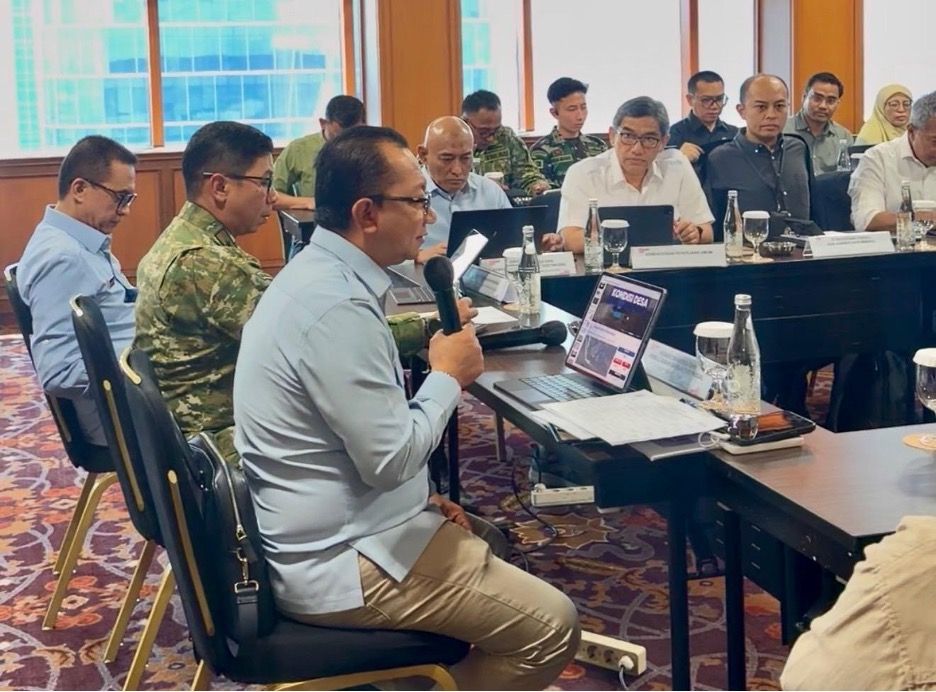
A primary strategic agenda discussed was cross-ministerial support for PKPN in the village sector, specifically accelerating the development of frontier, outermost, and disadvantaged regions (3T). This program is directed toward reinforcing connectivity, providing basic infrastructure, elevating education and health services, and developing local economic potentials.
Proposed targeted interventions encompass 431 disadvantaged and highly disadvantaged villages across 84 districts in 17 regencies. Development requirements span education, health, residential, connectivity, economic, and food security infrastructure, paired with capacity building for human resources and village institutions.
Beyond PKPN synchronization, the meeting reviewed preparations for the TNI AD Large-Scale Community Service in Bengkulu Province. Scheduled from October 17 to December 8, 2026, this initiative represents part of broader efforts to reinforce collaboration among Kemendes PDT, TNI AD, and related ministries/agencies in driving rural development acceleration.
Through this collaboration, cross-sectoral support is expected to address basic infrastructure needs and improve public service access. Inter-agency coordination remains crucial to ensure program readiness, designate priority locations, define role distribution, and align execution with ground realities faced by local communities.
Kemendes PDT also underscored the necessity of consolidating incoming ministry/agency programs at the village level. Based on Ministry of National Development Planning (Bappenas) tracking via the KRISNA system, 130 output details across 24 ministries/agencies were recorded in 2025, expanding to 193 output details across 29 ministries/agencies in 2026.
To support synchronization, Kemendes PDT dispatched official inquiries to 77 ministries/agencies to identify village-level initiatives. A total of 63 ministries/agencies responded, with 22 having submitted detailed program data.
Consolidation efforts are imperative given that Indonesia encompasses 75,266 villages, with 4,672 classified as disadvantaged and 4,694 as highly disadvantaged under the 2025 Village Index (Indeks Desa). These conditions highlight the urgency of development acceleration backed by collaboration, integrated planning, and optimal resource utilization.
Alongside physical infrastructure development, Kemendes PDT continues to drive community economic strengthening through BUM Desa revitalization, Merah Putih Village Cooperative expansion, flagship product downstreaming, Export Villages (Desa Ekspor), and Tourism Villages (Desa Wisata) as part of the 12 Actions to Build Villages, Build Indonesia.
The synergy between PKPN and the TNI AD Community Service in Bengkulu is expected to serve as a concrete step in bolstering development program integration, broadening access to basic services, and accelerating economic equity for rural populations.
These measures align directly with President Prabowo Subianto's 6th Asta Cita, focusing on building from the villages and from the grassroots for economic equity and poverty eradication, while fortifying national development foundations toward Indonesia Emas 2045.
Text: Ofa
Photo: Fira